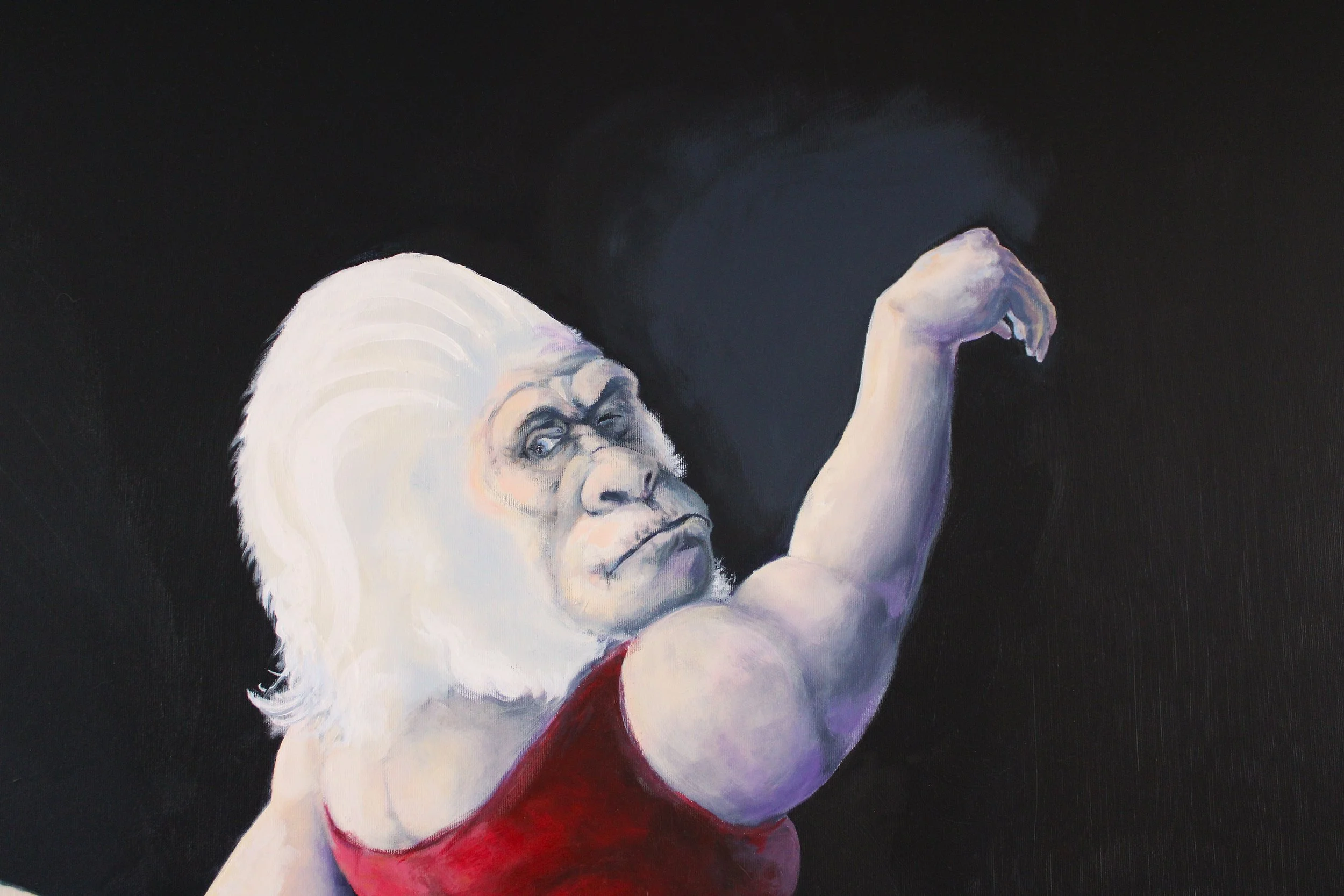
Close-up of a roaring auroch with hybrid human features, painted in a neo-surrealist Wildate style — dark red background, tense expression, and textured fur.

The Wildate begins

where love turns feral.

A fragile line

between man and nature.

A wild desire —

never equal,

never still.

Fragments of a corrupted encounter.

(theatrical, symbolic, still breathing.)

A myth in mutation —

where nature seduces and resists,

mirroring our fragility.

Allegories of a posthuman desire —

between devotion, possession, and loss.

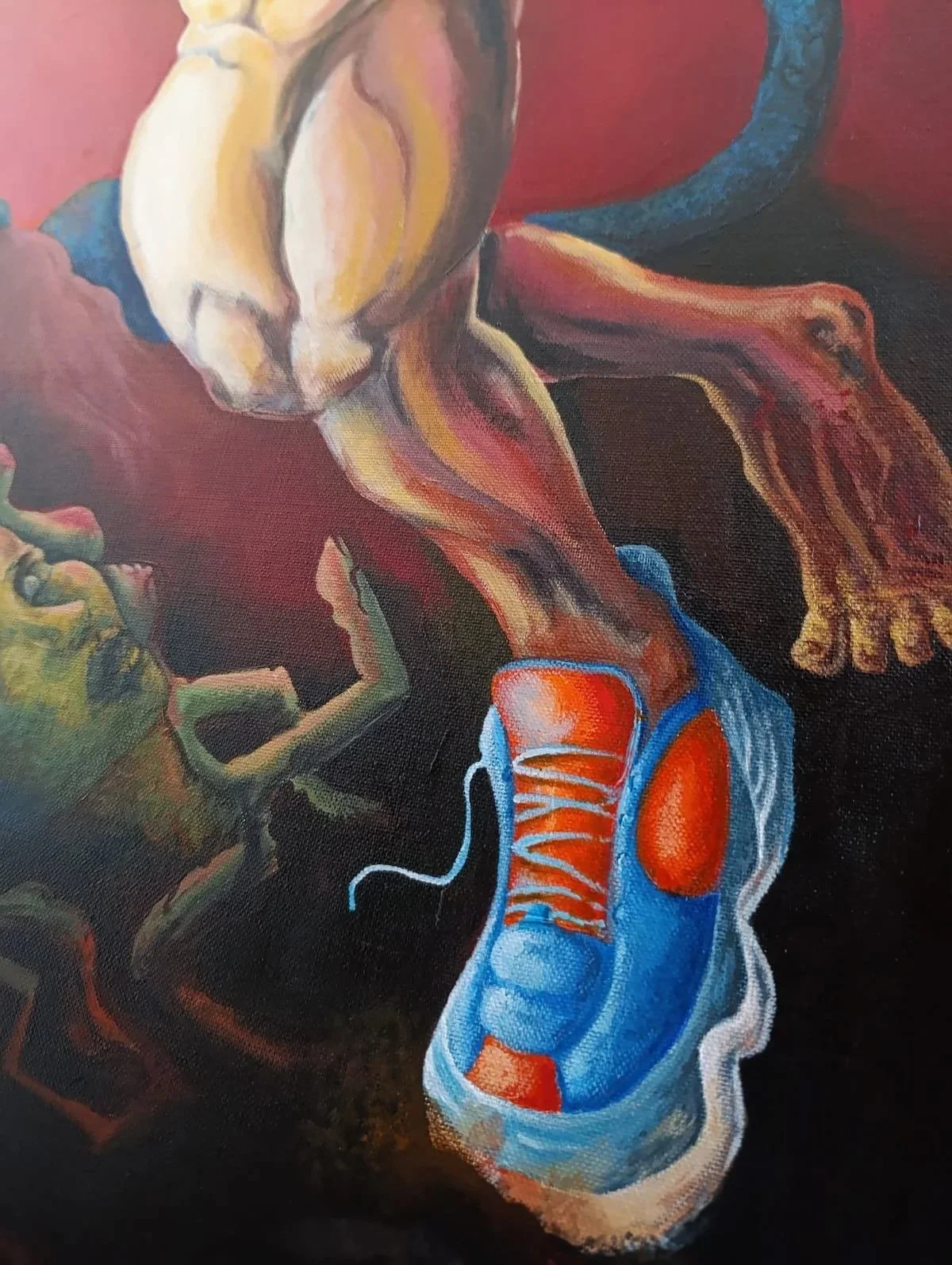
Detail from The Cry Is Born by Galanka, rounded belly of a pregnant anthropomorphic bear, hand resting protectively. Neo-surrealist painting, symbolism of birth and metamorphosis.
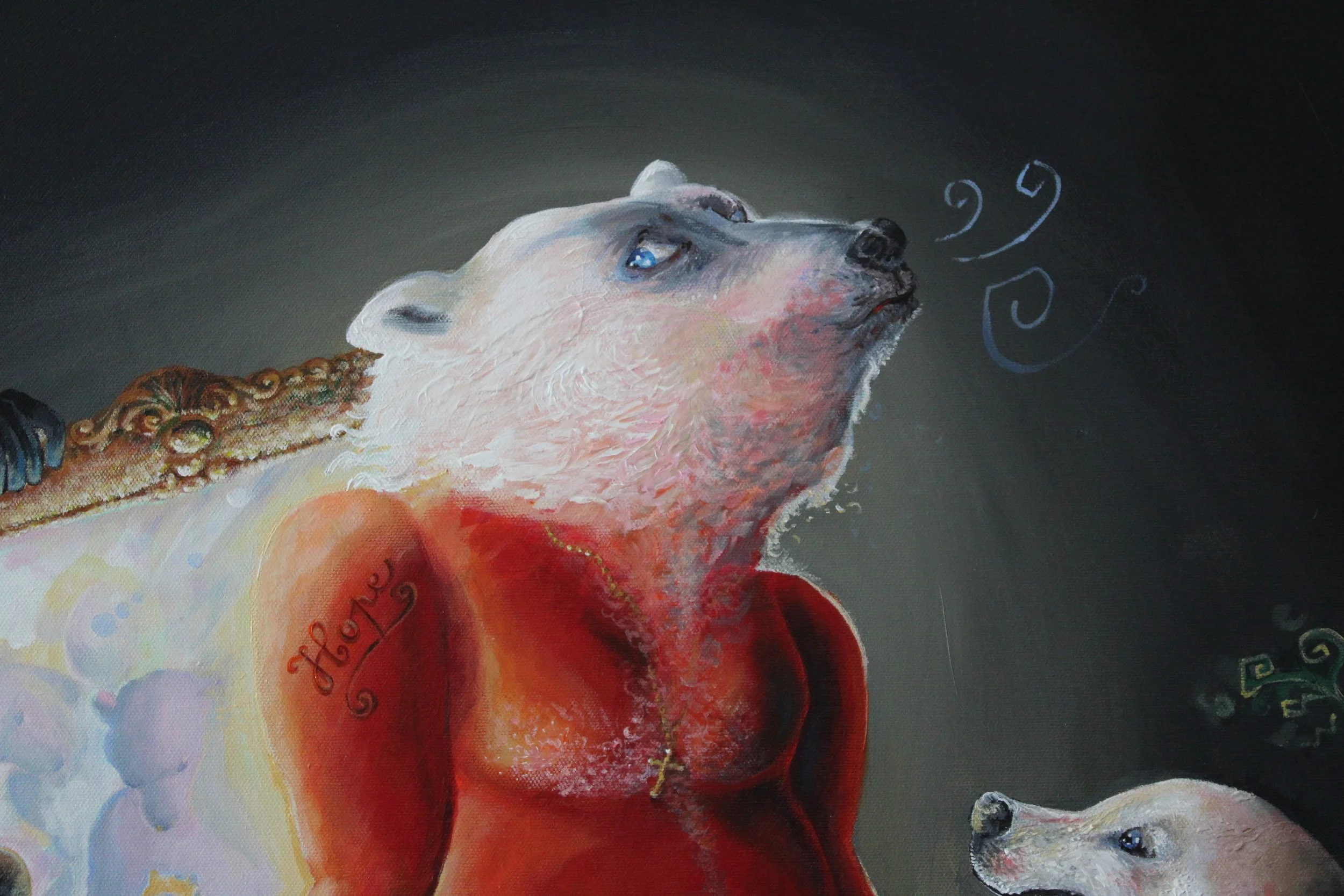
Detail of the painting Merely Adapted by Galanka, showing the word hope tattooed on a muscular arm, surreal and symbolic art

Wildate — excerpt

A face-off — a seduction, a rupture.

Where the human confronts the wild.

Where nature, humanized against its will,

throws our contradictions back at us.

Each piece stages a body in conflict —

the story of a dangerous rendezvous.

Wildate — excerpt

A face-off — a seduction, a rupture.

Where the human confronts the wild.

Where nature, humanized against its will,

throws our contradictions back at us.

And where the masks we wear, often unknowingly.

Each piece stages a body in conflict — the story of a

dangerous rendezvous.

Galanka is a post-anthropocenic artist

tracing the fault line

between the human and the wild.

His works fuse theatrical surrealism

with ecological mythology.

Through the Wildate cycle,

he questions what remains

of instinct in posthuman age.